Start gently
Understand pacing and create a comfortable entry point. A gentle start can include fewer decisions, more pauses, and a familiar setting.
GUIDES
Our guides combine explanations, checklists, and reflection prompts so readers can make thoughtful choices.
Each guide is designed to be read in parts. Begin with the context, choose one manageable idea, and return to the notes after you have seen how the idea fits your actual week.
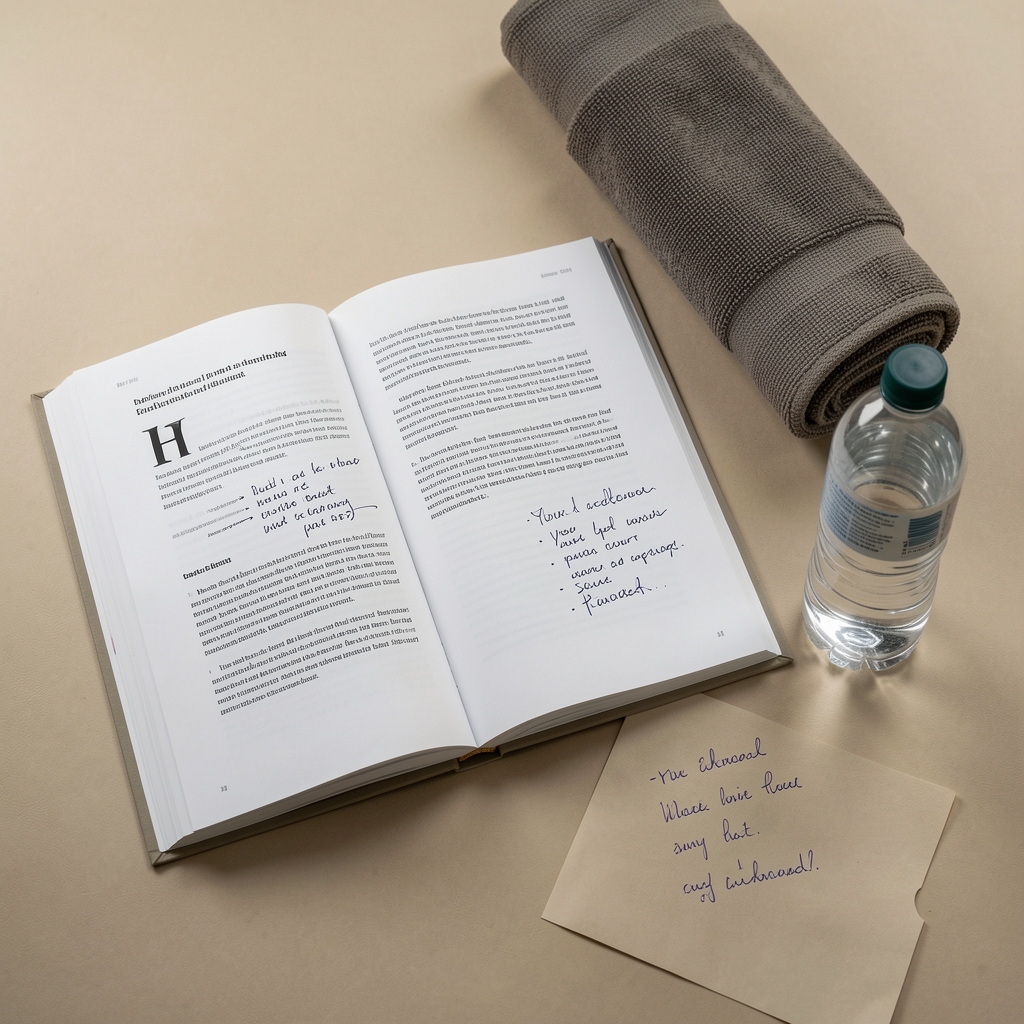
Understand pacing and create a comfortable entry point. A gentle start can include fewer decisions, more pauses, and a familiar setting.
Use prompts and weekly structure without turning life into a scorecard. Continuity can come from returning to a small anchor.
Separate useful signals from assumptions and pressure. A written review helps distinguish the day’s context from a broad conclusion.
| Format | Best suited to | How to use it |
|---|---|---|
| Overview | Learning the language and scope of a topic | Read once, then return to the definitions |
| Checklist | Preparing a short practice or conversation | Mark only what is relevant today |
| Reflection prompt | Reviewing what happened in context | Write observations without forcing a verdict |
A guide becomes useful when it helps you pay attention to your actual experience rather than creating another demand.

Instructions use ordinary language and identify where a reader may need to adapt. We avoid framing a single sequence as the answer for every person.
If a passage raises a personal concern, use it to prepare a question for an appropriate local professional rather than trying to resolve the question from a page alone.
Suggest a guideOnward’s material is general information for adult readers. It is not a personal assessment, and no page can account for every history, environment, or changing condition.
“One clear next question can be more useful than a long list of instructions.”— Onward guides desk, 2026
Onward is based at Jalan Thamrin No. 10, Menteng, Central Jakarta, DKI Jakarta 10310, Indonesia.